What Is Plasma, and Why Does It Matter?
A quick guide for new donors
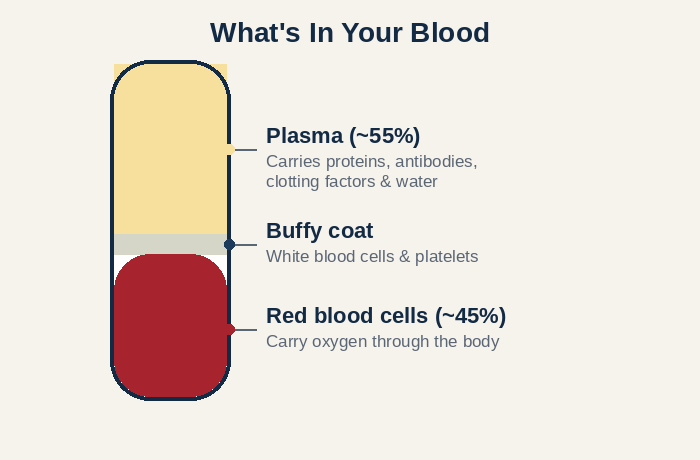
Plasma is the pale yellow liquid that makes up about 55% of your blood. When blood is spun in a centrifuge, it separates into three layers: plasma on top, a thin "buffy coat" of white blood cells and platelets in the middle, and red blood cells at the bottom. Plasma itself is roughly 90% water, but the remaining 10% carries hundreds of proteins, antibodies, clotting factors, and nutrients that your body relies on every day. It's the medium that moves almost everything else through your bloodstream.
Why donated plasma matters
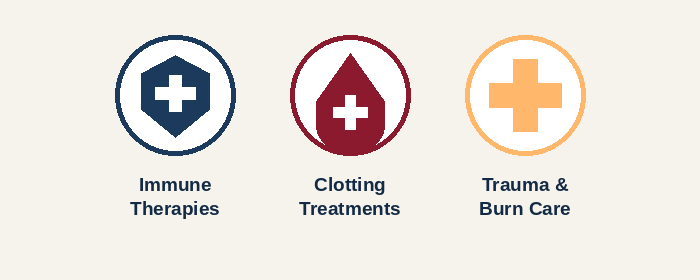
Once collected, donated plasma is processed (a step called fractionation) to extract specific proteins and turn them into therapies that can't be made any other way, not even synthetically. Immunoglobulins support patients with primary immune deficiencies who can't fight infections on their own. Clotting factor concentrates treat hemophilia and other bleeding disorders. Albumin helps stabilize patients with severe burns, trauma, or liver disease, and other plasma-derived products are used to treat rare genetic conditions and certain autoimmune diseases. Because a single donation can be split into several different therapies, one donor can end up helping multiple patients, sometimes for years, since many of these conditions require ongoing treatment rather than a one-time fix.
What donating is actually like
Plasma donation uses a process called plasmapheresis: blood is drawn, the plasma is separated out, and your red blood cells are returned to your body along with some saline. Because you keep your red cells, your body replenishes the donated plasma volume within about 24-48 hours, which is why most centers allow donors to give up to twice a week. The visit typically takes longer than a standard blood donation, but many first-time donors are surprised at how straightforward the process is.
This page is general information, not medical advice. Eligibility requirements (age, weight, health history, and more) are set and verified by each donation center at the time of your visit.
Ready to find a center near you?
Search Centers